
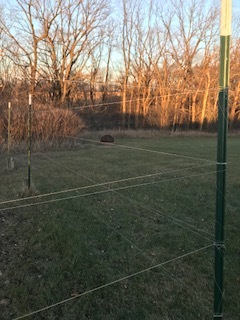
has been a real challenge this past year. We have been using an inexpensive solution of 25 lb. fishing line strung at 1 foot intervals between 8 foot stakes. When the deer strolls into the line, his automatic reaction is to back up. But not before breaking a line or two. Last weekend I spent hours restringing the "fence." Although the barrier has never been completely "breached" it does require regular attention. Perhaps a real fence is the answer?
Christmas came early to Walnut Hill Farm...

...when Conrad delivered an "insect hotel!" When filled with lots of natural materials, creating nooks and crannies, this bug mansion will provide deluxe accommodations for the beneficial insects, who, in return, will provide pollination and pest predation. Can't wait to "decorate" it! Merry Christmas, Conrad, and thank you!
Delicious addition to our salads all winter long!

A passive hydroponic system in the greenhouse produces a variety of microgreens in less than 2 weeks! This Spicy Micro Mix from Johnny's Seed includes a colorful blend of red and green mustards...and it pairs beautifully with their Mild Micro Mix of Mizuna, Cabbage, Kale, and Kohlrabi.
Buttoned up for winter!
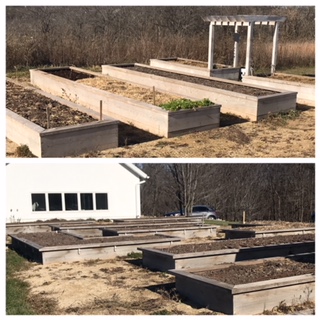
All the beds have been "put to bed" for the winter.
Last harvest

The remaining carrots, beets, and kohlrabi were harvested this weekend and were a wonderful complement to our Thanksgiving dinner!
Last walnut....

is holding on! But all of the others have fallen and these Black Walnut tress are bare. Winter is not far behind!
It's all about the soil...

...and nothing will build up the soil better than rich organic matter. These new bins behind the barn will ensure a steady supply of compost for my beds.
Local Landmark - The Half-Way Tree
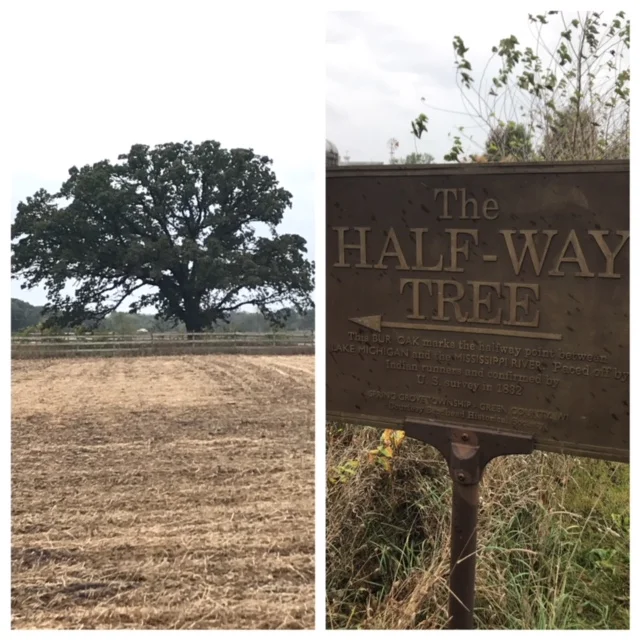
This BUR OAK marks the halfway point between LAKE MICHIGAN and the MISSISSIPPI RIVER. Paced off by Indian runners and confirmed by U.S.Survey in 1832. (Spring Grove Township - Green County, Wisconsin).
Getting ready to plant the garlic!

BEFORE and AFTER pics! Each of the beds needs to be cleared of all the dead plant debris and prepared for our fall planting of garlic. I am adding 3 inches of mushroom compost to each bed. Couldn't bring myself to rip out the blooms just yet....but when we plant the garlic, we'll switch out the marigolds for some bulbs that will bloom in the spring!
The sunchokes are magnificent!

They finally opened!
What are these plants...

...that tower over us at 10 to 12 feet tall, and fill up half of a 20 foot bed? They are Jerusalem artichokes (Helianthus tuberosus), commonly known as sunchokes. I am growing them at the request of family members who fell in love with the delicate flavor of this root vegetable when traveling in California. It's a species of sunflower native to the eastern part of our country. The tuber should be ready to harvest next summer and, in the meantime, I shall have to content myself to wait for the blooms that should appear before the frost!
Culinary lavender

Here John is selecting lavender for a chocolate lavender cake he's hoping to make! This bed, right outside our front door, makes for a heavenly scent!
Very tempting...

and although it looks ripe, it still needs a few more weeks. One way to tell is by taste; another is by the color of the seeds inside. Ripe apples will have dark brown seeds. Light seeds mean the apple still has some maturing to do. Patience is a virtue....
One of our native flowers....

Rudbeckia hirta, commonly called black-eyed-Susan, is a North American flowering plant in the sunflower family, native to Eastern and Central North America and naturalized in the Western part of the continent as well as in China. Wikipedia
Walnut Hill?

The farm is named for the stand of young black walnut trees at the top of the drive. Juglans nigra, or black walnut, can present challenges for the farmer. The trees are allelopathic, which means they release chemicals from their deep roots which exude a natural herbicide called juglone. Juglone can kill or stunt the growth of many of the garden's fruits and vegetables. The plentiful trees informed our decision to construct raised beds in the vegetable garden. We look forward to harvesting the nuts of these fascinating trees this fall.